
TRENDING DESTINATIONS
Last updated on: 07 Aug, 2026

Ask ten people when to visit Finland and you'll get ten different answers. Most of them are right, too. Figuring out the best time to visit Finland comes down to what you actually want out of the trip. A silent, snow-covered forest with the northern lights overhead? The sun refusing to set at midnight? Helsinki's design district buried under orange leaves in October? All three are real Finland trips, and they don't happen in the same month. If you're planning this yourself, or leaning on a travel partner like Flip Trip Holidays to sort the logistics, it pays to know how much this country changes depending on when you show up. Even scrolling through Finland Tour Packages makes more sense once you get this, since most of them are quietly built around just one version of the country. Here's the breakdown, season by season, region by region.
Here's what trips people up: Finland stretches from the Baltic coast all the way past the Arctic Circle. Helsinki, down south, is a fairly normal Northern European city with cold winters and mild summers. Lapland, up north, plays by different rules entirely. The sun doesn't rise there in December. It doesn't set in June. That single fact changes almost everything about how you should plan.
We've watched travelers book a Helsinki-style trip and get completely thrown by how differently Lapland behaves. Figure out which part of the country you actually care about first. That decision matters more than any calendar.
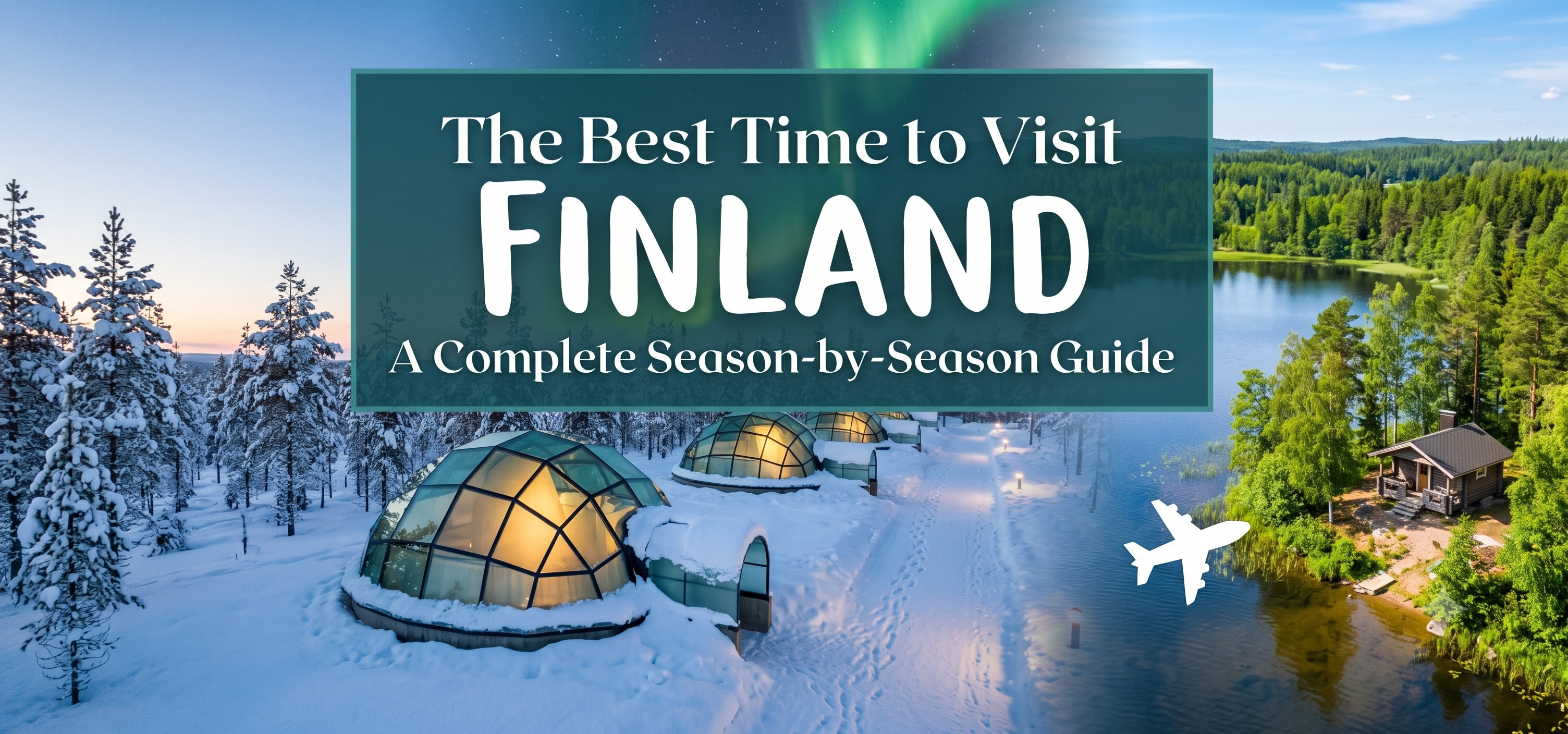
Snow piles over the pine forests, glass igloos glow after dark, huskies pull sledges across frozen lakes. December through February is Finland at its most photogenic, and if the aurora is your whole reason for coming, this is generally the best time to see the northern lights in Finland — Lapland specifically. Late November through March brings long, dark nights and reasonably clear skies, which is really what you need for a good sighting.
Rovaniemi gets packed in December, largely thanks to its Santa's-hometown branding. Want a quieter aurora hunt? Go in January or February instead. Same sky, far fewer tour buses.
One warning: Lapland regularly drops below -15°C in winter, sometimes much colder. An extra sweater won't cut it. Real thermal layers are non-negotiable. Helsinki stays milder in comparison, closer to freezing, and its Christmas markets make for a gentler winter base if extreme cold isn't your idea of fun. Either way, look into reindeer sledging, ice fishing, a snowmobile safari, or a night in a glass-roofed cabin watching the sky. Just don't expect a guarantee — the aurora is weather-dependent, not scheduled, and some nights it simply doesn't show.
Worth flagging too: winter days up in Lapland are short, sometimes just a few hours of dim, blue-tinted daylight around the polar night. It's not depressing so much as strange, and most visitors find they adjust within a couple of days. Pack a headlamp if you're planning anything outdoorsy in the late afternoon, since it gets dark faster than you'd expect.
Hardly anyone plans a spring trip to Finland, which is exactly the point. March and early April in Lapland still feel like full winter: snow, cross-country skiing, aurora sightings continuing right through, minus the crowds and prices of December. If you want the Lapland experience without peak-season costs, this window deserves way more attention than it gets.
Down south, spring rolls in slower. Helsinki's snow starts melting through April, days get noticeably longer, and by May the parks and cafés fill back up with locals who've clearly been waiting all winter for this. It isn't swimming weather yet, but it's a pleasant time to wander the capital minus summer's price tags. Trying to combine Lapland snow with a few Helsinki days? Spring makes that far easier to pull off.
Everything flips in summer. Up in Lapland, the midnight sun keeps the sky bright for weeks; in the far north, it doesn't set at all for roughly 73 days around the solstice. Your body clock will need a day or two to catch up, but most people end up loving the extra daylight for hiking, fishing, and just staying outside longer than usual.
This is also when Finland's "land of a thousand lakes" reputation actually makes sense. Locals head to lake cottages most weekends, swim, hop between saunas, and grill dinner well past a reasonable bedtime since it barely gets dark enough to notice. Helsinki might be at its best right now too: packed outdoor terraces, a buzzing Market Square, and an easy ferry ride out to Suomenlinna for the afternoon.
Midsummer, or Juhannus, lands around the solstice in late June and is a genuinely big deal here. Fair warning, though: plenty of Finns leave the cities for their cottages that weekend, so don't be surprised if some Helsinki restaurants are closed. Summer is peak season and peak pricing, especially for Lapland's adventure lodges, so book a couple of months ahead if these dates matter to you.
Pack for variable weather even in July — a warm afternoon can turn cool and drizzly by evening, particularly up north. A light jacket earns its space in the suitcase more often than you'd think, even during the sunniest stretch of the year.
Late September is probably Finland's most underrated stretch. This is "ruska" — a short, sudden burst of red, orange, and gold sweeping across the forests, especially in Lapland's national parks like Urho Kekkonen and Pallas-Yllästunturi. Hiking through it, crisp air, almost nobody else around, might be the best way to see the north that people forget to mention.
By late September, nights get dark enough for the aurora to return too, meaning northern lights season kicks back in before the brutal cold arrives. That's a solid trade if you want a shot at the lights without freezing through it. Southern Finland's autumn runs quieter and milder: golden parks in Helsinki, locals out picking mushrooms and berries, none of summer's crowds. Better weather, lower prices, a slower pace overall — autumn quietly checks a lot of boxes people forget to ask about.
Since this question comes up constantly: aurora season in Finland runs roughly from late August through early April, with the darkest, clearest window usually falling between November and February. Lapland (Rovaniemi, Levi, Saariselkä, Inari, and that whole belt) gives you the best odds simply for being far enough north and dark enough at night. Helsinki occasionally catches a faint glow during strong solar activity, but counting on it as an aurora destination is setting yourself up to be disappointed. Plan at least a week up north during peak season for the best shot. Clear skies matter more than darkness alone, and no single night is ever a sure thing.
Most Finland trips end up being a trade-off between these two, and the "right" time depends entirely on which one you care about more. If Lapland's aurora, snow, and reindeer are the whole draw, let that region's calendar run the show, since it swings between extremes far more dramatically than the south. If Helsinki and the southern coast appeal more, May and September usually hit the sweet spot: decent weather, fair prices, a city that still feels lived-in rather than overrun by tourists.
Plenty of travelers try to fit both into one trip, and it's doable. Just don't treat the flight or overnight train between Helsinki and Rovaniemi as a minor detail. These two places feel like separate countries. Rushing between them kind of undermines the point of visiting either one properly.
Chasing the aurora specifically? December through February in Lapland, cold as it is, gives you the darkest and most reliable conditions of the year. Working with a tighter budget, or just tired of crowds? Look at March-April or September-October, trading a bit of weather certainty for noticeably better prices and a calmer pace. Traveling with kids? Summer is the obvious pick, since long daylight means flexible schedules, easy swimming, and a much shorter cold-weather packing list. Into photography or hiking? Late September's ruska season is genuinely hard to top: color, light, and quiet, all together, for maybe two or three weeks a year.
Finland's trains and domestic flights are solid enough that combining regions in one trip is realistic. But the distances are bigger than the map suggests. Helsinki to Rovaniemi runs about 13 hours by road, or roughly 90 minutes by air, so plan around that instead of assuming it's a quick hop. Daylight hours shift so much between seasons that it's worth checking actual sunrise and sunset times for your travel dates instead of guessing off the month alone, especially in Lapland during the shoulder months.
Sauna culture is worth a mention too. It isn't really a tourist activity here so much as a normal part of daily life, and you'll find one in most hotels, cabins, and even public swimming halls no matter when you visit. If Lapland's glass igloos or aurora cabins are on your list, book early. They sell out four to six months ahead for the December–February window more often than people expect. A rental car buys you the freedom to chase clear skies away from town lights, though winter driving here takes some getting used to if you're not already comfortable with snow and ice.
If forced to pick just one, late September. You get the tail end of ruska's colors, dark aurora-friendly skies returning, and a fraction of peak-season crowds, minus winter's harshest cold.
Yes, with some adjustment. Helsinki's winter is cold but manageable, much closer to an average European winter than Lapland's deep freeze. If Lapland still feels intimidating, shorter two- or three-day trips with proper rented gear (most operators provide it) make the cold far more bearable than people expect going in.
Pretty much, yes. Helsinki sits too far south, with more light pollution and less reliably clear skies, so sightings there are rare and unpredictable at best. Lapland's remote darkness is really what makes the lights consistently visible in the first place.
It's on the pricier side of Europe, similar to its Nordic neighbors, though costs vary a lot by season and region. Shoulder-season travel and self-catering cabins can bring the total down considerably compared to a peak-summer or peak-winter trip booked through premium lodges.
There's no single right answer to the best time to visit Finland. It depends entirely on which version of the country you're chasing. Winter brings snow, sledging, and a real shot at the aurora. Spring and autumn offer a quieter, cheaper take on the same landscapes. Summer trades all of that for endless daylight and a Helsinki that feels wide awake. Match the season to what you actually want, and Finland tends to deliver no matter which month you land in.

About the Author Prerna Chajwani
Prerna is an SEO writer and with her in-depth research, she follows a strategic approach to content creation and specializes in travel content. At Media Upshift, she shares insights from her experience developing high-performing, search-optimized content that reaches audiences and drives organic growth for businesses.
Connect on LinkedIn
Best Time to Visit Australia: Month-by-Month Weather & Travel Guide
September 10, 2026
Top 20 Things to Do in New Zealand for First-Timers (2026)
September 04, 2026
12 Best Places to Visit in Norway for First-Timers (+ Map & Itinerary)
August 27, 2026

15 Best Places to Visit in Phu Quoc (2026 Guide): North vs. South Island
August 11, 2026
The Best Time to Visit Finland: A Complete Season-by-Season Guide
August 07, 2026
Share article via:


Popular International Destinations!



© 2025 Fliptripholidays.in All rights reserved.
All content and images of this site are copyright of their owners. They are used here only for promotion. Unauthorized use is prohibited and may lead to legal action.


 +91 9999316597
 info@fliptrip.in
 +91 9999316587
 806 A09,
ITL, Northex Tower, NSP, Pitampura
806 A09,
ITL, Northex Tower, NSP, Pitampura