
TRENDING DESTINATIONS

Last updated on: 15 Jul, 2026

When is the best time to visit Europe? is one of the most common questions travelers ask us, and the honest answer is that there isn't a single right answer. The best time to visit Europe genuinely depends on what kind of trip you're dreaming of, because unlike many destinations, Europe rewards visitors in every single month of the year. Snow-dusted Christmas markets in December, blooming tulip fields in April, sun-soaked Mediterranean coastlines in July, and golden vineyards in October all belong to the same continent you just need to know when to chase which experience which is exactly why so many travelers now compare ready made Europe Tour Packages before locking in their dates, since a good package is only as good as its timing. So, when it comes to Europe, best time to visit really is a personal question rather than a single calendar date. This guide breaks down Europe's climate, crowds, and costs season by season and month by month, so you can plan a trip that matches your travel style, your budget, and your bucket list. And if you'd rather leave the planning to the experts, Flip Trip Holidays is a great place to start.
Before diving into the month-by-month details, it helps to understand that "Europe" isn't one climate — it's several. Northern Europe (think Scandinavia, the UK, and the Baltics) runs cooler year-round, with long summer daylight and short, dark winter days. Central Europe (Germany, Austria, Switzerland, the Alps) has four distinct seasons with real winter snow and warm, green summers. Southern Europe (Spain, Italy, Greece, Portugal) stays mild in winter and gets genuinely hot in summer, which is why the Mediterranean coast is so popular in July and August but equally lovely — and far less crowded — in May or September. Keeping this regional variation in mind will help you use the month-by-month guide below more effectively, since "spring in Europe" can mean blooming tulips in Amsterdam and short sleeves on the Amalfi Coast at the very same time.
It's easy to assume that "Europe season" means June through August, but that's only part of the story. Europe is a true 12-month destination, and every season brings its own personality, price point, and postcard-worthy moments. Summer delivers long daylight hours and buzzing beach towns; autumn brings wine harvests and mellow gold-lit cities; winter transforms alpine villages into fairy-tale scenes and fills town squares with Christmas markets; and spring wakes the continent up with blossoms, mild weather, and fresh energy. Thinking of Europe as a year-round destination — rather than a summer-only one — opens up better prices, thinner crowds, and experiences that peak-season travelers simply never see.
A great way to picture this is Switzerland. In summer, you get "Green Switzerland" — lush alpine meadows, glacial lakes turned turquoise by snowmelt, and endless hiking trails through the Bernese Oberland. Visit the very same mountains in winter, though, and you'll find "White Switzerland" instead: snow-blanketed peaks, world-class ski resorts like Zermatt and St. Moritz, and cozy chalets glowing against the dark. Same country, same mountains, two completely different holidays. That's the essence of planning around Europe's seasons rather than defaulting to summer out of habit.
If there's one insider tip we'd want every traveler to walk away with, it's this: shoulder season is Europe's best-kept secret. The shoulder seasons — roughly April to May and September to October — sit right between the cold, quiet winter and the hot, crowded summer, and they consistently offer the best overall value for a Europe trip.
During these windows, the weather is pleasant almost everywhere, ranging from mild and fresh to warm without the punishing heat of July and August. Crowds thin out noticeably at major sights like the Colosseum, the Louvre, and Santorini's caldera, meaning shorter lines, easier bookings, and a more relaxed pace of sightseeing. This makes shoulder season Europe travel especially appealing if overtourism is a concern for you — you'll get to actually enjoy a city rather than fight through it. On top of that, flights and hotel rates typically drop compared to peak summer pricing, so your money simply goes further. For photographers, culture lovers, and anyone chasing that "discovered it myself" feeling, April–May and September–October are consistently the sweet spot, and we'd strongly recommend building your itinerary around them if your dates are flexible at all.
Beyond weather and crowds, the best time to visit Europe also depends heavily on who's coming with you.
Traveling with kids? Summer and early autumn — roughly June through September — tend to work best for families. School holidays align conveniently with this window, daylight hours are long enough for a full day of sightseeing plus downtime, and logistics are simply easier: more attractions are open, more tours run daily, and swimming, outdoor play, and beach days are all on the table. Warm, dependable weather also means fewer scrambled plans if a park or outdoor activity gets rained out.
Traveling as a couple, or watching your budget? Winter deserves a serious look. Beyond the obvious charm of snow-covered landscapes and twinkling Christmas markets, winter travel in Europe comes with real financial upside and a quieter, more intimate atmosphere — think uncrowded viewpoints, easier dinner reservations, and cozier, more private moments than you'd get shoulder-to-shoulder with summer crowds. Picture candlelit dinners in a near-empty piazza, a private table by the window at a Christmas market mulled-wine stall, or having an entire alpine viewpoint to yourselves for photos. It's an underrated time for a romantic getaway or a budget-friendly city break, and because flights and hotels cost noticeably less, couples often find they can afford a nicer hotel room or an extra excursion than they could during the summer rush.
Of course, these aren't hard rules — plenty of families love the magic of a European Christmas market, and plenty of couples chase the long, sun-drenched evenings of a Greek island summer. Think of these recommendations as a starting point that you can adjust based on your own priorities, whether that's warm-weather activities, festival timing, or simply how much you want to spend.
If you're planning the best time to visit Europe from India, a few extra factors are worth weighing alongside the weather. Long-haul flights from Delhi, Mumbai, or Bengaluru to major European hubs like London, Paris, or Frankfurt run 8–10 hours nonstop, and fares typically follow the same peak/off-season pattern as everything else — summer (May–August) and the December holidays are the most expensive and most crowded times to fly out, while the shoulder months and deep winter offer noticeably cheaper tickets and easier seat availability.
Schengen visa timing matters too: appointment slots get tight in the April–August window as European summer demand spikes, so applying at least 6–8 weeks ahead is wise if you're traveling in peak season. Indian travelers heading out in the April–May or September–October shoulder window tend to get faster visa processing, better flight deals, and a far more comfortable trip overall, since they're avoiding both the European summer rush and the heaviest domestic monsoon-season travel disruptions back home in June–August. For a first Europe trip from India, we'd point most travelers toward May, September, or early October — the weather cooperates, the crowds are thinner, and airfares are usually kinder to the wallet.
Let's talk numbers, because this is often the deciding factor. Across flights and accommodation, the price difference between Europe's peak season (roughly June to August, plus the December holidays) and its off-season is approximately 15% to 20%. That's a meaningful gap — on a €2,000 trip, you could realistically save €300–€400 simply by shifting your travel dates. If you're looking for the cheapest time to travel to Europe, deep winter (January and February, outside the Christmas–New Year window) and late autumn (November) tend to offer the lowest fares and hotel rates of the year, while shoulder season gives you a smart middle ground of good weather and better-than-peak pricing.
Here's a closer look at what to expect month by month, including the weather, a top destination, and a signature event worth planning around.
If you're mapping out the best places to visit in Europe in summer, the Greek islands, the French Riviera, Croatia's Dalmatian Coast, and "Green Switzerland's" alpine trails should all be on your shortlist — each delivers on warm weather, long daylight hours, and that classic bustling-beach-town energy families and beach-lovers are chasing.
Off-season travel in Europe — think November, January, and February — doesn't get nearly enough credit. Yes, days are shorter and pack a coat, but you'll trade summer crowds for near-empty museums, effortless restaurant bookings, and noticeably lower prices on flights and hotels. If your goal is a slower, more immersive trip rather than a checklist of sights, off-season Europe delivers an experience that peak-season travelers rarely get to have.
| Season | Months | Weather & Vibe | Price vs. Peak | Best Suited For |
|---|---|---|---|---|
| Spring | March – May | Mild, fresh air, blooming flowers, awakening cities. | Shoulder pricing — moderate savings. | Sightseeing, nature lovers, first-time visitors. |
| Summer | June – August | Warm to hot, long daylight, "Green Alps," buzzing beach towns. | Peak pricing — highest of the year. | Families with kids, beach lovers. |
| Autumn | September – November | Crisp air, fall foliage, wine-harvest energy, thinning crowds. | Shoulder to low — solid savings by November. | Photographers, culture seekers, couples. |
| Winter | December – February | Cold, "White Alps," snow, Christmas markets, festive lights. | Lowest of the year — roughly 15–20% cheaper. | Couples, budget travelers, ski enthusiasts. |
January and February usually come out cheapest, since they sit outside the Christmas rush and well before summer demand kicks in. November is a close third for city breaks. Flights and hotels in these months often run 15–20% below what you'd pay in July or August.
For most first-timers, yes. April–May and September–October give you comfortable weather, noticeably shorter lines at major sights, and better rates than peak summer. You do trade off some beach-ready certainty, but the calmer pace usually makes up for it.
Around 2–3 months ahead is a safe window, especially for travel between April and August, when Schengen visa appointment slots fill up quickly. Booking flights 8–10 weeks out also tends to land noticeably better fares than booking last-minute.
Not really. Museums, landmarks, and city centers stay open through winter, and Christmas markets are honestly better experienced in the cold. What you will lose is beach season and access to some high-altitude hiking trails, which close once the snow arrives.
At the end of the day, the best time to visit Europe ultimately comes down to what you want out of your trip. Want lush alpine trails, beach days, and long summer evenings? June through August delivers, especially if you're traveling with kids and value ease over exclusivity. Want fewer crowds, better prices, and comfortable weather? Shoulder season — April, May, September, and October — is hard to beat. Chasing romance, snow, and serious savings? Winter, with its "White Alps" and Christmas markets, might be exactly what you're after.
Europe doesn't have an off-season so much as it has different seasons, each with its own reason to visit. Once you match your priorities — weather, crowds, budget, or companions — to the right month, you'll find that there really is no wrong time to fall in love with Europe.

About the Author Prerna Chajwani
Prerna is an SEO writer and with her in-depth research, she follows a strategic approach to content creation and specializes in travel content. At Media Upshift, she shares insights from her experience developing high-performing, search-optimized content that reaches audiences and drives organic growth for businesses.
Connect on LinkedIn
Best Beaches in Australia for a Relaxing Family Vacation
July 31, 2026

15 Dreamy Honeymoon Destinations Every Newlywed Couple Must Visit
July 31, 2026

Best Family Vacation Spots: Top Places to Travel with Kids
July 22, 2026
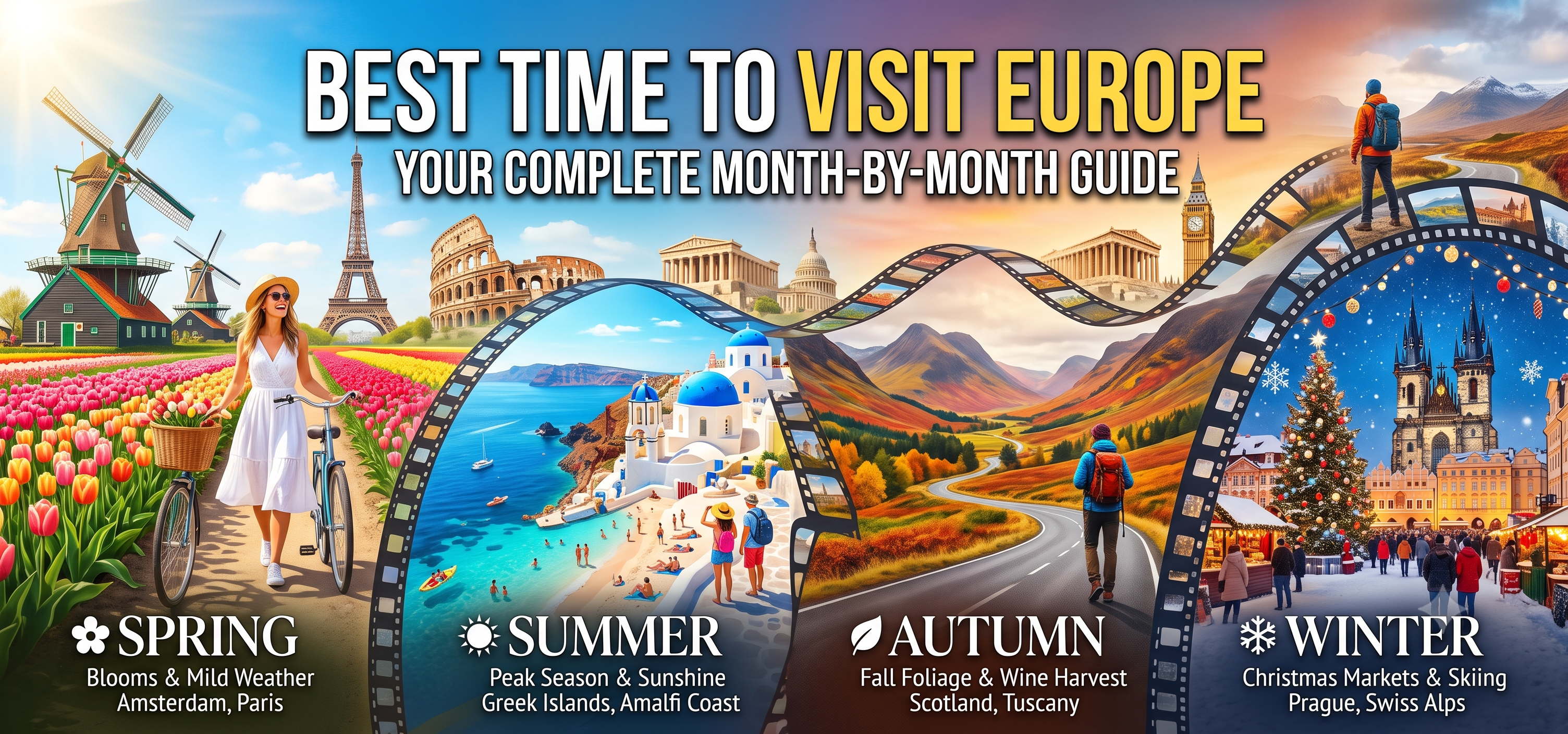
Best Time to Visit Europe: Your Complete Month-by-Month Guide
July 15, 2026

500+ Mountain Captions for Instagram: Short, Cute & Aesthetic
May 20, 2026
Share article via:


Popular International Destinations!



© 2025 Fliptripholidays.in All rights reserved.
All content and images of this site are copyright of their owners. They are used here only for promotion. Unauthorized use is prohibited and may lead to legal action.




 +91 9999316597
 info@fliptrip.in
 +91 9999316587
 806 A09,
ITL, Northex Tower, NSP, Pitampura
806 A09,
ITL, Northex Tower, NSP, Pitampura